Is Live Audio Streaming the Future of Social Engagement?
Live audio streaming — real-time, voice-first sessions in which people talk to each other instead of posting at each other — has quietly become one of the most engaging formats in social media. A voice chat that connects everyone in one room moves interaction closer to what conversation has always been: listening, reacting, and replying in the same moment. This article explains what live audio streaming is, how platforms use it for voice rooms, group chats, and broadcasts, why it is growing in 2026, and how to choose, host, and participate in it safely.
What live audio streaming actually is
Live audio streaming is the real-time transmission of voice over the internet, letting listeners join an ongoing session the moment they open it — no download, no finished recording, no video production. Low-latency protocols keep the gap between speaking and hearing small enough to feel natural, while optimized audio codecs compress the stream so it stays clear even on mobile connections. Everyone in the room hears the same words at almost the same instant, which is what makes the format feel live rather than recorded.
Two design choices separate it from other formats. First, sessions are public or semi-public, unlike a private call. Second, the experience is built around presence rather than content. There is no finished product to consume — only a conversation that unfolds. That is why live voice rooms feel closer to walking into a gathering than to watching a stream.
How social platforms use live audio
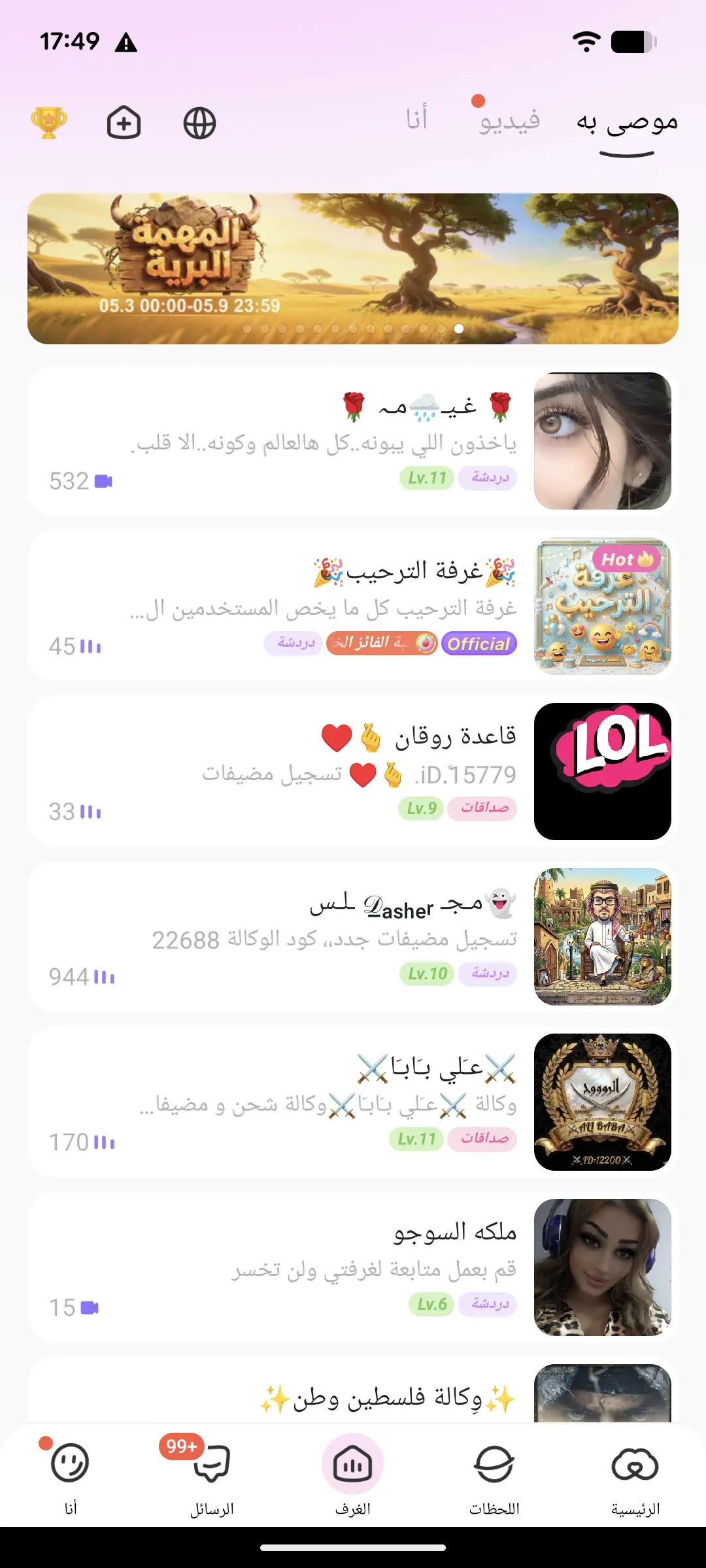
Social platforms use live audio in three familiar shapes. The voice room is a themed, persistent space where anyone can drop in and out, listen, or raise a hand and speak. Rooms drift between topics, moods, and languages over a day, and some grow regular crowds. The group chat or party is a bounded session with a clear host and speaker rotation, closer to a show. Broadcast-style audio has a host speaking to a large audience with heavy participation through reactions and comments — live radio minus the schedule and the studio.
What makes all three social rather than broadcast is the feedback loop. Listeners respond with voices, reactions, and messages, and the host answers in real time, so the audience shapes the session. Repeated appearances deepen the effect: people recognize voices, remember earlier stories, and return at the same hour, turning a stream into a relationship. On platforms like SUGO, where live parties, themed rooms, and virtual stages sit side by side, that loop is the core of the product, not an add-on.

Why live audio is growing in 2026
Three reasons are compounding. The first is the low barrier to entry. Video asks for lighting, framing, and confidence in front of a camera; text asks for writing. Speaking asks for none of those supplies — a phone and a voice are enough. Creating collapses from a production project into a conversation, which is why both casual users and creators can go from zero to live in minutes.
The second is emotional connection: reacting to the same sentence at the same moment creates a shared experience that text threads and recorded clips cannot provide.
The third is the creator economy. As platforms have matured, so has the business of audio: hosts sustain regular shows and earn through optional fan support, virtual gifts, and in-app tipping, all without video production budgets. Minimal overhead plus direct audience monetization has made live audio one of the most efficient formats for turning listeners into supporters.
How to choose a live audio platform
Five factors separate a good fit from a frustrating one. Latency comes first: a session where reactions arrive late or speakers talk over each other feels broken, so look for platforms built on low-latency voice infrastructure. Audio quality is second — clear voices, noise handling, and stable connections matter more in a format with no visual backup. Scalability is third: a platform that handles a fifty-person room should also handle a stage with thousands of listeners. Community design is fourth — discoverable rooms, private calls, moderation tools, and simple onboarding determine whether interaction actually happens. Safety is fifth, and for an adult platform it is non-negotiable: verified identities, age restrictions, visible rules, and working reporting tools let a mature audience relax instead of looking over its shoulder.
For creators, monetization design matters too: fan support, virtual gifting, and engagement mechanics should be built into the product so supporting a creator stays voluntary and transparent. A platform that combines all of these — as SUGO does with voice-first rooms, 18+ verification, and a built-in virtual gifting system — is a different proposition from an app that treats community as an afterthought.
How creators build an audience with audio
For creators, live audio is less a medium than a relationship engine, and the formats that work let the audience participate rather than watch. Q&A sessions turn passive listening into a two-way exchange and produce the most loyal listeners, because being answered once converts a follower into part of the show. Storytelling exploits what audio does best: a strong voice, pacing, and silence can carry a story that would fight for attention beside competing visuals. Themed rooms build habit — a regular weekly topic gives listeners a reason to return at a specific hour. Collaborative shows and guests bring in fresh voices, while a live audio stage with structured battle or feature formats gives newer hosts a predictable setting and an audience already gathered.
The mechanics that turn listeners into community members are simple: reactions, comments, and acknowledgment. Ask questions by name, thank regulars out loud, repeat a comment before answering it — small gestures that make the listener feel seen. Over time, passive listeners become active members who invite friends and support the host. None of it requires video equipment, and platforms explain the earning side for streamers who want to make real money.
Best practices for hosting a live audio session
- Choose one clear theme and outline a few points before going live. A room that knows what it is about attracts the right people and gives newcomers an easy way in.
- Open the conversation early and often. Ask questions, read comments aloud, and invite listeners to speak; a session becomes engaging the moment the audience stops being an audience.
- Protect the audio itself. Use a quiet room, a decent microphone or headset, and headphones so the session does not feed back.
- Schedule consistently. A fixed weekly slot builds habits faster than random brilliance, and regulars will tell you the schedule is the show.
- Repurpose after the session. Clip the best moments into highlights or turn the conversation into an episode; the content keeps working long after the stream ends.
Where live audio fits in the creator economy
Live audio is the engagement layer, not the archive. Video and written content build libraries that people discover over time, while live audio builds relationships that people return for. The two reinforce each other — highlight clips feed discovery, and the live room converts discovery into loyalty.
Monetization follows the same logic. Because the audience is present in real time and emotionally engaged, optional support feels natural: listeners who would never pay for a recording will happily send a gift to a host who answered their question minutes ago. The healthiest model keeps this voluntary and transparent — support that rewards the relationship rather than gating the content. Platforms that design monetization this way let creators earn while the experience still feels generous, which is what sustainable creator income in audio looks like.
Safety on adult audio platforms
Live audio is immediate and personal, which is why safety matters more here than in most formats. There is no recording delay to catch a problem before it happens, so responsible platforms rely on layered defenses: real-person verification at signup to keep bots and impersonators out, 18+ age restrictions for mature communities, automated screening across languages, human moderation, and in-room controls like mute, block, and report. Explicit, zero-tolerance policies against harassment, exploitation, and illegal content set the standard the tools enforce. Anyone planning to host should read the platform guidelines before their first session — the rules are the social contract of the room.
How users can protect themselves
- Use privacy settings to control who can join your room or message you, and keep them on by default for one-on-one conversations.
- Never share personal details — full name, location, workplace, financial information — in public rooms, however friendly the mood.
- Report suspicious, harassing, or inappropriate behavior immediately instead of managing it yourself; reports are what make moderation work.
- Only join rooms that match your interests and comfort level, and leave freely when one does not. An invite is not an obligation.
- Watch time and emotional boundaries. Long sessions are absorbing, and a planned endpoint keeps the experience enjoyable rather than draining.
Conclusion
Live audio streaming is not replacing video, text, or images — it is filling the gap they leave open: a social interaction that feels like actually talking. For listeners it offers presence and intimacy; for platforms it offers a uniquely sticky form of engagement; and for creators it offers a low-barrier path to a loyal, supportive audience in the creator economy. The future of social engagement is not a matter of which format wins, but of how formats combine — and live audio, with its immediacy and emotional weight, has earned a permanent place in that future. If you have been exploring voice-based social experiences, live audio is the easiest place to start building a community today.
FAQ
Is live audio streaming suitable for beginners? Yes. It needs no special equipment or editing skills — a phone and a quiet space are enough. Platforms like SUGO simplify the start with fast signup and easy room creation, so new users can host or join conversations within minutes.
How do listeners support creators during live audio sessions? Through optional in-app tipping, fan support, and virtual gifts designed to be voluntary and transparent. Supporters choose to reward creators they enjoy, while the platform keeps monetization language neutral so the experience stays comfortable and ad-safe.
What makes live audio different from a regular voice call? Live audio is built for public or semi-public sessions with multiple participants and real-time audience interaction. Unlike private calls, it supports themes, speaker rotation, reactions, and large audiences.
Can live audio streaming be monetized safely? Yes, when the platform separates monetization from sensitive content and keeps it voluntary. Verified identities, clear policies, age restrictions, and explicit reporting tools keep both creators and supporters protected.
How can I start my own live audio show? Pick a clear theme, outline your key points, and create or join a voice room on a platform like SUGO. Test your audio quality, set a consistent schedule, and use reactions and community tools to grow an active, loyal audience over time.