
SUGO’s published age rules, account system, privacy policy, and reporting guidance give you controls to inspect. They do not establish that every interaction is safe or that SUGO is safer than every anonymous chat app. Compare data exposure, spending pressure, and practical exit and support options before deciding.
Last updated:
What Is the Real Safety Problem Behind Anonymous Chat Apps?
The useful question is what can go wrong and which controls you can actually use. A stranger may pressure you for money, misuse something you share, or continue contacting you after you want to leave. A persistent profile can give context, but it does not prove identity or good intentions. Anonymous access can reduce what you disclose publicly while still leaving information with the service provider.
There is no verified comparative incident rate or moderation test in this guide that establishes SUGO as safer than every anonymous chat app. Instead, compare published rules, data practices, user controls, and the limits of what is known. This article appears on SUGO’s own blog, so the comparison should be read with that relationship in mind.
How Does SUGO’s Safety Model Differ From Anonymous Chat Apps?
SUGO’s official materials describe accounts, group voice rooms, private rooms, and paid services. Its Terms of Service require users to be at least 18 and to have reached their local age of majority. These are published requirements, not proof that every account complies or that an interaction is safe.
An anonymous service may allow a guest name and a quick conversation without a long-lived public profile. That can limit what another participant sees, but you still need to read its data policy and check its exit and reporting controls. A label such as “anonymous,” “verified,” or “adult-only” does not answer all of those questions.
For identity checks specifically, see how SUGO real-person authentication helps reduce social scams. That separate guide covers verification and its limits; this page focuses on privacy, spending pressure, and responding to problems.
Safety-Control Layers: SUGO vs. Typical Anonymous Chat Apps
Use the same questions for both products. The table separates an observable control from a result that has not been independently established. Check the version and account you are using before relying on a feature.
| Question to compare | SUGO evidence or limit | What to check in another service |
|---|---|---|
| Who can use it? | The terms specify 18 and local age of majority; a rule does not establish compliance by every user. | Read the actual age rule and enforcement information rather than assuming guest access has no rules. |
| What identifies a participant? | An account or profile provides context, not a guarantee of a real-world identity. | Determine whether a nickname is temporary, whether accounts persist, and what other people can see. |
| Can you report harmful behavior? | SUGO’s published guidelines describe a Report feature for violating broadcasters. | Find the available reporting route and what information it requests. A button alone does not prove response speed. |
| What is disclosed about data? | The privacy policy describes account, content, device, and transaction information. | Read collection and retention terms even when the public interaction is described as anonymous. |
| What happens when money is involved? | Paid services and virtual items have their own terms; a payment does not establish trust. | Check the recipient, purchase terms, and support route before authorizing a charge. |
What does SUGO’s privacy policy mean for what you share?
The current published privacy policy distinguishes information you provide from information collected when you use the service. Its displayed revision date is December 30, 2024; that is the policy’s date, not the date this article was checked. Read any newer notice shown in the app if it differs.
| Information category | What the policy describes | Practical decision |
|---|---|---|
| Optional profile details | Items such as occupation, location, and nationality are described as optional. | Leave out a precise workplace or location if it is unnecessary for the conversation. |
| Content you send or broadcast | The policy includes text, voice messages, photos, video, and other uploaded or broadcast content. | Treat sharing as a separate choice from simply joining a room. This wording does not establish replay settings for every live room. |
| Device and location information | Device/network information and coarse location are described; GPS collection is described as requiring express consent. | Review device permissions. Hiding a profile location does not mean the provider receives no location-related data. |
| Transactions | Recharge and transaction records are described, with payment details handled through the chosen payment channel. | Keep the receipt and separate the app account from the billing account when tracing a problem. |
| Support conversations | The policy describes receiving contact details and the information sent with a support request. | Send enough to identify the incident; omit passwords, login codes, and unrelated identity documents. |
Information collected by the provider is not automatically information another room participant can see. Conversely, hiding information in a profile does not remove every record the provider may hold. Use both the product’s privacy settings and its policy to decide what you are comfortable sharing.
How Can You Use SUGO’s Features to Stay Safer Than on Anonymous Chat Apps?
Use the controls available in your account and keep clear personal boundaries. They can help you manage an interaction, but this guide does not establish that they make SUGO safer than another service in every situation. Start by knowing how to leave and where to report a problem, before you need those actions urgently.
SUGO’s Platform Guidelines describe prohibited conduct and reporting violating broadcasters. They do not provide this article with an independently measured response time or a guarantee that harmful content is removed before you see it. Room rules and a host’s presence are useful context, not a substitute for your own decision to stop an interaction.
Keep passwords and one-time codes out of conversations with other users. Treat requests for money, “verification fees,” or urgent private help as a reason to stop and verify the situation through a channel you chose yourself. The FTC’s romance-scam guidance explains why requests for money from an online romantic contact are a serious warning sign. It does not establish that every intense conversation is a scam.
Step-by-Step SUGO Safety Workflow for New Users
Use a short check before joining, then choose the next action according to what actually happened. These are practical safety suggestions, not instructions claiming a fixed SUGO menu layout or a promised support outcome.
- Set your disclosure limit. Decide what you will keep private: a home address, employer, daily routine, financial details, or personal documents.
- Inspect the room. Read its topic and rules, listen first, and leave if the conversation does not fit your boundaries.
- Check purchase prompts separately. Read who is charging you and for what. Do not buy a gift to prove trust or unlock a relationship.
- Locate the exit and report route. Use the controls actually shown in your account. Do not rely on another participant to report on your behalf.
- Respond to the incident, not the pressure. Use the relevant route below and avoid sending more sensitive material while trying to resolve it.
| What happened | A useful next action | What the action does not guarantee |
|---|---|---|
| Harassment or unwanted contact | Leave the interaction and use the available report or block controls. Note the account and relevant time. | A report does not establish immediate removal or prevent every attempt to contact you. |
| Pressure to pay or send a gift | Stop the purchase decision; keep the conversation and any receipt needed for a report. | An in-app purchase or a convincing profile does not prove the recipient is trustworthy. |
| A charge you do not recognize | Check the receipt and the billing provider’s official support process, alongside SUGO support where relevant. | A complaint does not guarantee a refund or a particular processing time. |
| A question about stored data | Use the rights and contact section in the privacy policy to identify the appropriate request. | Deleting visible content and deleting every retained record are different questions. |
| Threats involving private material | Stop sharing additional material, preserve relevant evidence where lawful, and seek appropriate local help if you face immediate danger. | Neither a host nor this guide can verify a threat or resolve an emergency for you. |
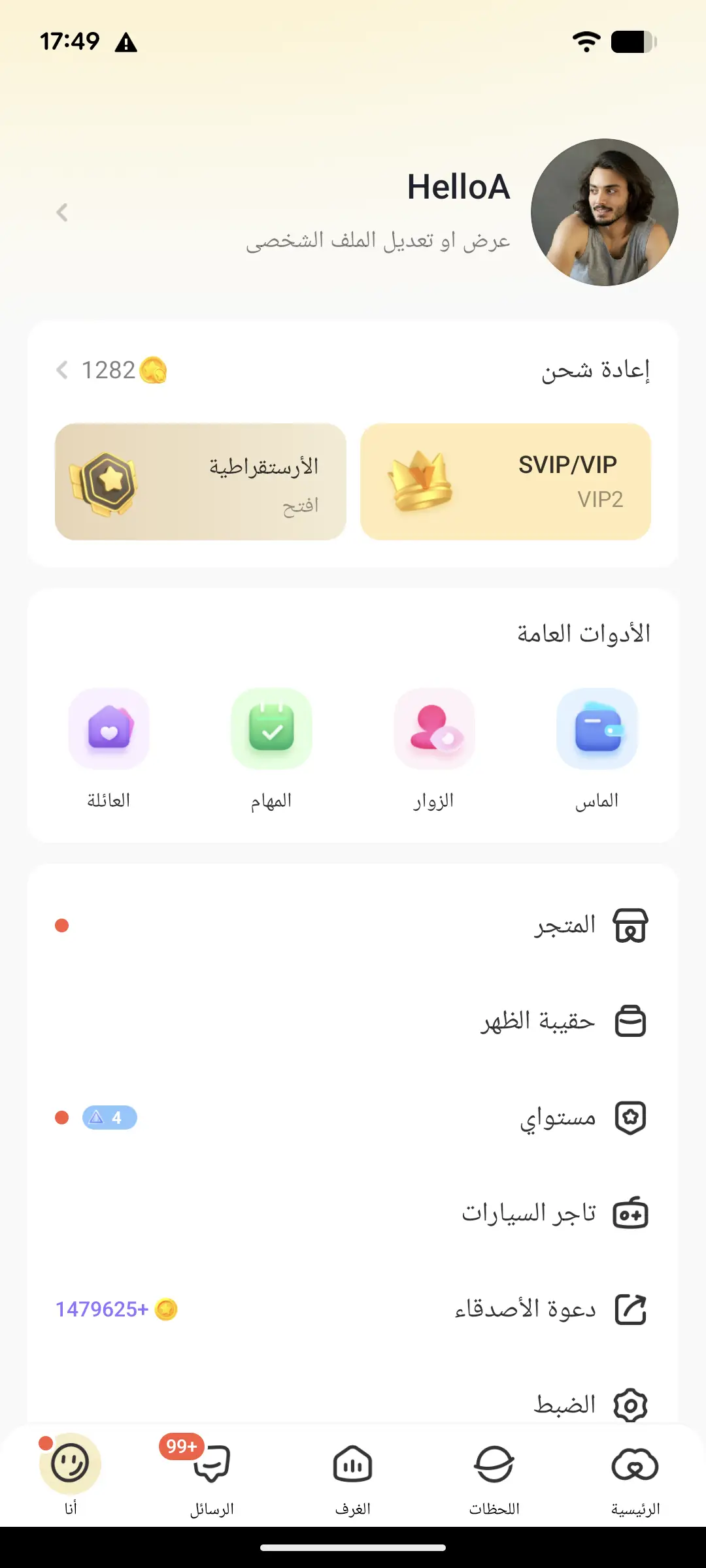
The account-menu example below illustrates why checking spending and account controls matters. It is an existing Arabic screenshot from this site’s media library, not proof of current prices, a particular privacy setting, or the identity of any user.
How Should Hosts and Streamers on SUGO Manage Safety More Proactively Than on Anonymous Chat Apps?
A host can set expectations and use the controls provided, while keeping promises within what they can actually do. State rules about harassment, recording, spending pressure, and respecting a person who wants to leave. Ask participants to use official reporting routes for incidents rather than collecting private documents in a room.
If a discussion is becoming difficult to manage, pause the activity or end the session. Do not promise private investigations, guaranteed account bans, compensation, or identity checks you cannot perform. A consistent room routine helps participants understand expectations; it is not evidence of a lower incident rate than another platform.
Conclusion: How Can You Decide Between SUGO and Anonymous Chat Apps for Safer Social Voice?
Compare the information each service asks for, what other people can see, how you can leave or report, and what happens when money enters the conversation. Persistent accounts and anonymous access each have trade-offs. SUGO’s published policies provide things to check, but they do not establish an across-the-board safety advantage.
Adults considering SUGO can open the official app link and review the current policies and controls before choosing what to share. Keep identity verification, payment support, and privacy requests as separate tasks.
FAQs
Does an account or verification badge make a conversation safe?
No. It may provide context or indicate a particular check, but it does not prove honesty, intentions, or the safety of a payment request.
Does a hidden profile location mean no location data is collected?
No. The policy describes coarse location and device or network information separately from optional profile fields. Check the policy and your device permissions.
Should I send my password or login code to another user who offers help?
No. Use the official sign-in or support process you opened yourself, and keep passwords and one-time codes out of conversations with other users.
Does making a report guarantee a refund or immediate account removal?
No. Reporting conduct, disputing a payment, and requesting account action are different processes, with outcomes that this guide cannot guarantee.
More guides on this topic: Privacy, Accounts and Anonymous Chat