
To find apps with verified profiles, check the official product source, read what each verification process establishes, and inspect the current profile indicator. SUGO has published certification information, but that does not establish universal verification or a bot-free community. Use live conversation for context, not proof of identity.
Last updated:
What Is the Real Problem with Bots and Fake Profiles?
Separate three questions: are you using the intended app, what has a particular profile actually verified, and is the request being made appropriate? An official app can still contain misleading accounts. A real person can deceive someone. A profile without a badge is not automatically a bot.
For SUGO, the Google Play listing for com.voicemaker.android is one product reference to compare with the app you intend to use. A store listing establishes product information, not that every participant is genuine or that a payment request is safe. This article is published on SUGO’s own blog, and it does not provide an independent bot-rate or moderation test.
How Do Verification Systems Work in Modern Social Apps?
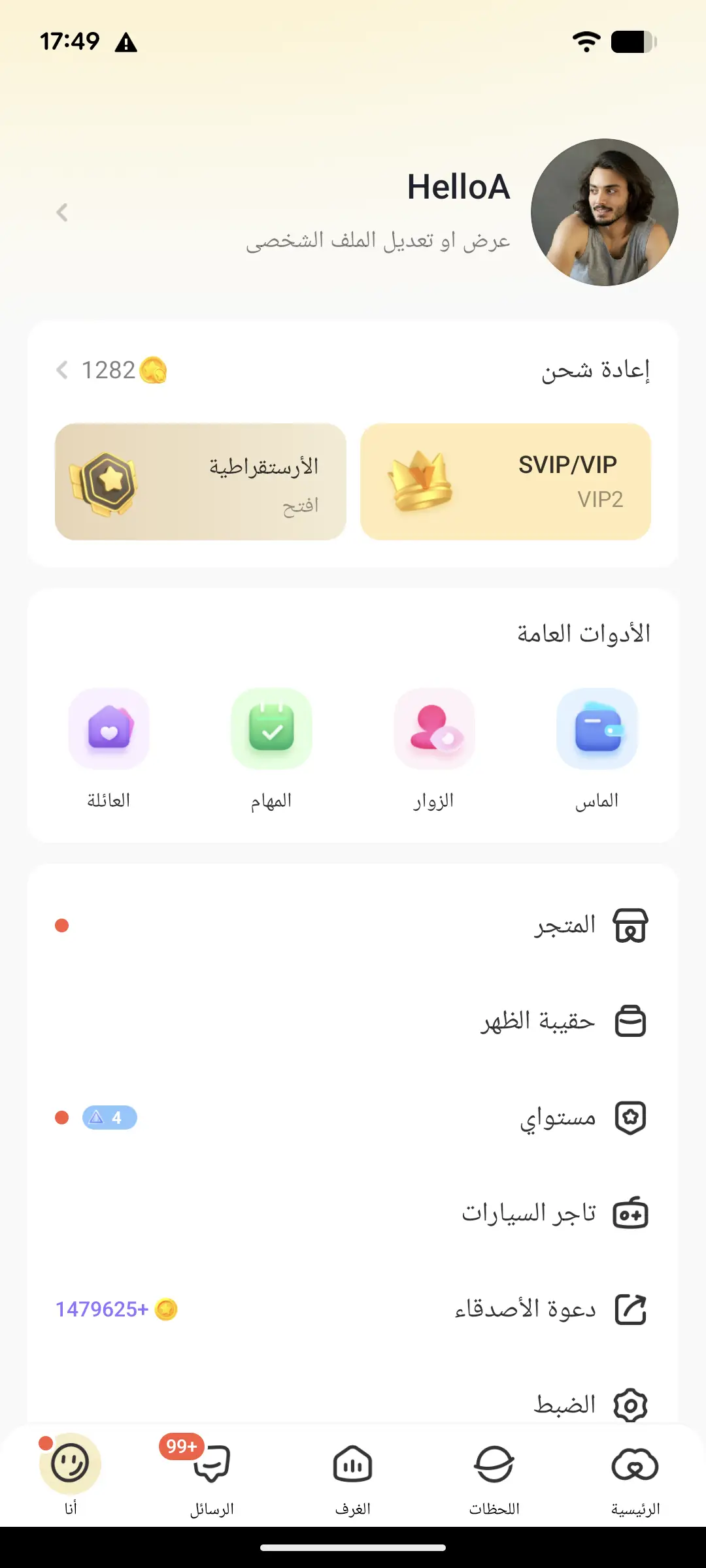
Read the name and scope of the check before interpreting a symbol. A phone-access check, a photo match, and a government-ID check are different processes. A visible subscription or VIP indicator may describe a paid feature rather than any identity check. The service’s current explanation is more useful than guessing from badge color.
For a concrete example, Tinder’s Photo Verification guide describes a video selfie compared with profile photos. It also warns that the mark does not guarantee all profile information. Keep that limited conclusion attached to the check. Use the separate comparison of verification methods in social apps when choosing among products; this page focuses on evaluating a claim and deciding your next step.
How Can You Identify Apps with Genuine Verified Profiles (Not Just Badges)?
Trace the claim to an official explanation, then inspect the actual account indicator. Do not accept a screenshot sent in a message as a substitute for the current profile. Screenshots can be old or altered, and a statement such as “everyone is reviewed” needs a clear description of what the review covers.
You do not need to create fake accounts or upload somebody else’s documents to investigate. That would not establish a representative failure rate and could expose information or break the service’s rules. Work with published evidence, the interface available to you, and support questions that do not require inventing an identity.
Verification Signals to Look for in Apps
| Question to record | Evidence to look for | Conclusion you should not jump to |
|---|---|---|
| Am I checking the intended product? | An official website or store destination, the exact listing, and the product information shown there. | A similar name, logo, or third-party download title proves the same product. |
| What does this indicator claim? | The current app’s explanation of that particular badge or status. | VIP, an online indicator, or a decorated profile means government-ID verification. |
| What did the process compare? | A documented description of phone access, photo matching, or identity/age checks. | A photo match validates work, income, intentions, or a separate financial request. |
| Who has completed it? | The status actually shown on the profile, subject to the service’s limits. | A verification feature means every registered user has passed it. |
| What would I disclose to use it? | The official consent, data, retention, and support information for your own check. | More documents necessarily mean a safer or more suitable social experience. |
A useful record can be as short as: “The app describes this as photo matching; this profile shows that indicator; the person’s separate business claim remains unverified.” That is a hypothetical example of evidence discipline, not an assessment of a SUGO user. It helps keep the decision proportional to what is actually known.
How Does SUGO Approach Verified Profiles and Bots?
SUGO’s Privacy Policy describes comparing a profile picture with a facial-recognition video, with approval, for certified streamers or real-person certification. The policy says it does not retain that verification video on its servers. Read the current consent information when deciding whether to submit your own material.
This is a published description of a certification process. It is not proof that all registered users completed it, that every profile uses a government-ID check, or that SUGO contains fewer bots than another service. An account’s existence, certification scope, and subsequent conduct remain different questions. For the steps concerning your own account, consult the SUGO authentication guide rather than asking another member to verify you privately.
How to Build a “Verified-First” Workflow When Choosing New Apps
Start with the social purpose and the information you are willing to provide. Compare the official process with that need, then locate the current reporting and support routes. If you cannot find an explanation of a badge, leave its meaning unresolved instead of turning uncertainty into either an accusation or a guarantee.
For adult social voice use, SUGO’s terms require users to be at least 18 and to have reached their local age of majority. A stated age rule does not independently verify everyone’s age. Do not ask someone to send identification to a personal account in order to settle that uncertainty.
Step-by-Step Verified-First App Selection Workflow
- Identify the product. Open the official source yourself, rather than relying on a link supplied by a stranger.
- Read the check’s scope. Note what is compared and what remains unverified.
- Inspect the live profile. Distinguish an account indicator from a screenshot, a premium style, or a claim typed in a bio.
- Keep the request separate. A normal conversation and a request for money, documents, or account access require different decisions.
- Choose a limited next step. Continue an ordinary conversation, ask official support about an unclear indicator, or stop and report a specific concern.
How Can You Spot Bots Even in Apps with Verified Profiles?
You can notice unusual behavior without proving that its source is a bot. Repeated scripts, irrelevant replies, a reused picture, or pressure to follow a link are reasons to pause. They are not a reliable way to distinguish automation, a hurried person, a translation tool, or deliberate human deception.
| What you observe | What it may mean | A proportionate next step |
|---|---|---|
| Identical replies ignore the question | A script, automation, language difficulty, or a person unwilling to answer. | Keep the exchange low-stakes or end it; do not claim you have performed a bot test. |
| A badge appears only in a screenshot | An old or altered image, or an indicator not visible in your current view. | Inspect the live profile and official explanation; leave the status unknown if it cannot be checked. |
| Someone avoids a voice or video call | Privacy, accessibility, timing, preference, or concealment. | Respect a refusal and set your own boundary. It does not prove a fake identity. |
| A friendly account asks for a login code or private ID photo | A request that is not justified by a friendly profile or a badge. | Do not disclose it to the user; use an official process you opened yourself. |
| An online contact pressures you to send money | A situation where urgency and apparent familiarity should not replace independent judgment. | Stop the payment decision and review the appropriate official help or reporting route. |
The FTC’s romance-scam guidance discusses requests for money from online romantic contacts and checking profile information. A reverse-image search may reveal reused photos, but a lack of matches is not proof of authenticity. Do not publish accusations or personal details based only on a suspicious-looking profile.
How Can SUGO Users Combine Verified Profiles with Voice to Avoid Bots?
Use voice to decide whether the conversation suits you, not as a final identity test. The FTC has warned that scammers can clone voices. Natural-sounding speech therefore does not establish a legal name, age, employment, or a legitimate financial request. A person declining to speak also does not become a bot by default.
A room can provide context about turn-taking and how people treat others. Repeated contact can tell you more about conduct. Neither should silently convert an unverified claim into an established fact. Keep your own limits around messages, disclosures, and spending even when the conversation feels familiar.
A practical report when a profile appears misleading
Describe the behavior you observed rather than diagnosing the person or claiming certainty about a bot. SUGO’s Platform Guidelines describe reporting violating broadcasters. Use the reporting or support controls actually provided for the situation; this guide does not promise a response time or account action.
- The account or room identifier as displayed, and the approximate time.
- The specific claim, message, impersonation, or request that caused concern.
- A brief sequence of what happened and what you already tried.
- Only the screenshots or other evidence needed to explain that conduct, with unrelated private material omitted.
Do not send passwords, one-time codes, another person’s identity documents, or an entire private conversation as a default report. If a purchase is involved, keep its receipt and use the relevant billing process as well; a conduct report and a payment dispute are different tasks. Reporting a concern does not guarantee a refund or prove the reported claim.
Conclusion: How Should You Actually Find and Use Apps with Verified Profiles?
Choose a suitable social setting, read the process behind its indicators, and keep your conclusion within the available evidence. SUGO’s documented certification is something to inspect, not a claim of universal verification or a bot-free community. Use conversation for social context, keep sensitive requests separate, and report specific conduct without pretending to prove someone’s identity yourself.
FAQs
Do verification badges guarantee that a profile is real?
They indicate only the scope of the service’s documented check. They do not validate every biographical claim, intention, or separate request for money or personal information.
Is an unverified profile necessarily a bot?
No. A check may be optional, unavailable, incomplete, or something the person chooses not to use. You can keep your boundaries without claiming that the account is fake.
Does a natural voice prove that I am speaking to the claimed person?
No. Voice can provide conversational context, but it is not a final identity test. Human deception and voice cloning both limit what you can infer from hearing someone.
Should I create fake profiles to test an app’s verification?
No. That does not establish a representative failure rate and can create privacy or rule problems. Use official documentation, current account indicators, and appropriate support questions instead.
More guides on this topic: Scams, Fake Profiles and Verification